THE GLOBALCEMENTCRISIS(GCC)
Dave and John were mulling over the report they received from their friend Eric at Brown Chemicals claiming a new substance that bonds materials with great strength. Eric invited them to the factory in Botany to review his work as he believed this new product could replace traditional cement in concrete manufacture.
Dave and John ran an engineering consultancy, JD Engineers, with offices across Australia. Over the past 25 years they had built the business from a two man partnership into a multi disciplined engineering and management group. They employed 1000’s of engineers designing and managing the development of major infrastructure and buildings. The business had expanded across Australia and up into Asia. They had joint ventures in Europe and North America to share technology and bring their own ideas around the world.
The idea of using ‘cemsure’ ( Eric’s name for the chemical) as a replacement for cement seemed very attractive. Portland cement was a key component in the construction industry but was being attacked by the environmental activitists because of the energy required in its manufacture.
Eric ushered them into the back area of the research department. “My bosses are not very supportive of this work as we are mainly involved in chemicals for the paint industry and they have no interest in construction.” Dave enquired “ how did you come across cemsure?”
I was fiddling with a new additive when it clagged the paint material. I tried different doses and started to understand how it combined with another material that we had been using. Bingo! I then started mixing sand and quickly was able to create high strength bricks. It was then that I thought of you guys as I had little experience with construction materials.
I’ll show you some of the results I have to date. I set them out in the report that I prepared. They all checked the numbers and John noted that the production cost was about a third the cost of portland cement used in concrete manufacture.
“ How do you know you can produce cemsure at this cost? It’s very cheap.”
Eric responded “ The main components are well known and the special additive is something I guessed for price, but it’s small in quantity. We will have to check into that some more. It is sourced from the residue of mineral sands production. The main ingredient of paint comes from the minerals sand industry, that’s why we have been dealing with them. It’s a waste product for them and it can be unstable if mishandled. I believe they will be happy for us to take it off their hands.”
“ What do you mean it’s unstable? Dave asked.
“ If it gets too hot it can be a bit unpredictable, but I’m sure we can manage that.”
A few days later Dave had studied the report in detail and concluded that the potential for cemsure was immense. There was a lot of work to be done.
First a company needed to be established to develop the product and establish a business plan. Who should become equity holders? Where can they get the development money?
Over a beer a couple of weeks later John and Dave discussed the issues.
“ Dave, this is big. If cemsure comes on the market at a third the price of cement it will be a hit” “John, we have a lot of hurdles before it will be accepted. Government, industry, building codes, the engineering profession and safety issues need to be explored. It could take years to get approvals. I’ve started a small group in the back office to lay down a plan and a budget to get us underway.”
Eric was encouraged by our analysis and started to put a manufacturing plan together. In a couple of months he was quizzed by his bosses about the work. He didn’t want to be totally open as it was clearly outside the paint industry. He had a dilemma, get their buy in and approval or drop the whole thing. He explained the general idea of his work and received a fairly negative response. What to do.
When John discovered Eric’s situation he knew it was time to act. There was no point in continuing without Eric. He called Dave and talked about formalising the company and a budget. The discovery was too good to let go.
The three of them sat down and agreed a plan. $5 million seed money would be allocated from the engineering business, Eric would be employed as a full time technology leader and an office established in Botany. Six weeks later they convened in the new office to discuss the plan.
Eric had established a source of supply for the feedstock with a mineral sands company who were happy to release the waste material. It was a liability on their books. There were vast quantities of it!
Dave quizzed Eric about the ‘secret ingredient’ that came from this feedstock. “ You said that it can be unstable? “
“Well, one of the chemicals is unstable before it combines but I think it will be OK once the reaction is complete.” Eric spent the next several hours running through the issues and how the ‘instability ‘ could be managed. He explained that it was slightly radioactive due to small amounts of thorium. He believed that he could manage the issues with the mix and produce a simple powder similar to portland cement at a third the cost. An additional benefit was the chemical nature of the process used almost no energy which was becoming a large environmental problem for traditional cement.
Over the next year many tests were run and all interested parties were invited to seminars and demonstrations to view the results. In parallel with traditional concrete manufacture cemsure performed extremely well. It gained strength much quicker as it set and exceeded the 28 day test strength by 30-40 % of portland cement.
Dave was a little concerned about the ‘instability’ that Eric alluded to in the early days. Eric said he had minimised the problem and with good management it shouldn’t be an issue. Dave pressed him a little further. In the longer term, say 10 to 15 years , will it still be stable? Eric said there were no guarantees but he was hopeful that all would be well.
Over the next three years cemsure grew in popularity and government endorsed it as a great contributor to reducing greenhouse gas emissions. The traditional cement suppliers had mounted a broad media attack suggesting that cemsure was an unknown product and had no track record. There were suggestions that the chemical was a health hazard and tried to compare it to asbestos. They claimed the radioactivity would be harmful to children. The media had a field day for a year but ran out of steam when each claim was carefully rebuffed and the environmental benefits were put to the fore.
Cemsure corporation now had 100 employees and purchase agreements were concluded for large quantities of monazite from the waste dumps owned by the mineral sands industry.
The portland cement producers were cutting prices but could not compete with cemsure.
The cemsure owners were at the crossroads. Do they float the company or sell to the traditional suppliers. It could turn into a billion dollar venture and go global. They needed $80 million to establish a manufacturing plant in western Sydney and had no problem raising the debt required. The bankers were impressed with the penetration of the market in Australia which had reached 30% and of course noticed the positive press about the low carbon footprint of the product.
In 18 months the new plant came into production and could satify demand for Australia and SE Asia. Growth in Asia was very strong, more driven by the price advantage.
Dave tackled Eric again. How can we put this instability issue to bed. Are there tests, can we get some atomic analysis? Eric understood the question and it had been bothering him too. If cemsure is hugely successful and thousands of bridges and buildings are constructed will they still be competent to survive with this potential ‘instability’ however small an issue it might be.
The market had not been advised of this potential as in the early days the work had concentrated on supply chains and production issues.
Dave shared his concerns with John who had taken the chairman’s role for the company.
“ John, there is a chance that our product could fail in 10-15 years due to an instability, possibly due the small amount of radioactive substance that Eric mentioned. He doesn’t seem worried but I’m feeling we should advise the market.”
John’s response was surprising. “ We don’t know if there is a problem. Everybody loves the product and we stand to make hundreds of millions of dollars if we go forward. Eric said the chance of failure is extremely small and the world will have improved the climate change problem with our near zero emissions product. I think you are worrying too much.”
Dave thought about it over his next two beers.
“ John, do you remember the GFC around 2008. The bankers were trying to expand their business by changing the risk profile of their lending programs. They took on high risk loans which they then collateralised into a new product, mortgage backed secutities (MBS). The rating agencies, the S&P’s of the world, then gave the new product investment grade status. They didn’t look closely at the long term stability and that lit the fuse for the explosion many years later in 2008. The initiators of this scheme knew the risks but didn’t tell the market. In fact they made the whole game more complicated by creating collaterised debt obligations (CDO) . Not happy with that they they finally made matters more complicated by developing credit default swaps (CDS) another financial derivative, to insure against defaults on CDO’s Their attitude seemed to be, by the time they find out what is going on we will be long gone with our profits. Isn’t this the same situation?”
John responded, “ Well, no one was charged or went to jail. The government just took tax payers money, trillions I know, and tried to put the system back to normal. “
“ John, you are missing the point, thousands of people committed suicide and millions were left destitute. It was a massive calamity for the world. If our product fails bridges will collapse and buildings will crumble with many deaths. People won’t buy the argument that we thought it was a miniscule risk and worth taking. Engineers are held to a higher standard.”
“ Dave, after the GFC the government imposed major restrictions on financial institutions to guarantee it wont happen again. If there are future problems we would have sold the company and moved on. I don’t want to forgo this opportunity to become mega rich, we’ve worked hard for it.”
Dave was troubled but accepted the Chairman’s position and returned to the problem of their massive expansion. He met with Eric to finalise the production schedules and supply chain issues. The chemical process was the key that Eric had developed. It couldn’t be reverse engineered as the elements seemed to disappear after reaction. Once the product was in the bag only Eric knew how the process had occurred. Competitors couldn’t reproduce an alternative.
Over the century concrete had had a chequered history. Mixing techniques had led to very poor strength and quality issues. 40 years ago ‘concrete cancer’ had emerged as a major problem. This was caused by air pollution in cities, ‘acid rain’, penetrating concrete and rusting the steel reinforcement. This was solved by putting a chemical in the mix which entrained the miniscule air bubbles and stopped water penetration. However thousands of structures were poorly built and needed major refurbishment.
In another case, to increase production rates for precast products aluminium powder was added to the mix to accelerate the curing. The downside was discovered when a shipload of concrete piles on its way to the tropics had disintegrated en route due to the high temperatures and humidity in the hold.
Concrete is valuable because of it’s compressive strength, it has little tensile strength and requires steel reinforcement to be useful as a structural component. It takes a month to reach it’s working strength and continues to cure for a long period of time. Cemsure in concrete reaches higher strengths quicker than portland cement. However its long term stability is unknown.
The general industry was aware of this and traditional concrete manufacturers were against
cemsure. The building industry was in favour because of the low cost and higher strengths. The issue of acceptance was finally resolved by the environment activists who demonstrated strongly outside parliament to convince the government to urgently approve the product generally.
Cemsure was established in Australia and now needed to develop a strategy for global acceptance. John had approached ready mix concrete companies in Europe and the USA. JD Engineering’s partners had facilitated this. Their relationships with the various governments had added confidence to the market. The plan was to do all manufacture in Australia as the raw materials were available in bulk for decades to come. A team initially went to the US to demonstrate the competitiveness of the product against portland cement. Transport costs were an impact but were relatively small. Although improved strength was a feature the much lower cost was the main selling point.Various tests were set by the building authorities and came through with flying colours. Many questions were asked about its durability and stability. Dave had written a sales document which alluded to long life for the product. He stated that there was no information that would suggest that it was unstable. This was true but it had only been around a few years.
After six months all Federal and State governments in the US and Canada had approved cemsure for use in concrete. This was very fast for the authorities but a strong push by the environment movement had fast tracked the progress.
Cemsure now needed $500 million to build an expanded manufacturing facility for world supply. John had talked to financiers who were falling over themselves to participate. The facility itself would be designed and managed by JD Engineers as it was their bread and butter work.
Within two years cemsure had taken 60% of the market in Australia and 15% of the USA. Sales were growing at 5% per month and were over $5 billion globally.
The three investors had been able to hold onto all the shares in Cemsure and largely fund development with debt. When they floated the company on the ASX they only released 30% of the stock to the public so they could keep control and keep the chemical process secret from competitors. The value of the company went into the many billions of dollars.
A couple of years later over dinner John, Dave and Eric were enjoying the success as the stock in Cemsure Corporation had made them billionaires. Eric was toying with his wine when he announced that a building owner in Darwin had called to say his building columns had some small cracks down the vertical line. It was only three storeys but was one of the first to use cemsure. Dave pricked up his ears. “ How did he know to call you?”
Eric responded “ The builder was one of the first of our customers when we were doing the tests. We let him have the product for free to get going.”
Dave asked “ That was about 7 years ago. Did the hot, humid weather contribute?”
“ I’m heading up there next week to do some tests, we should know more in a month or so.” Dave glanced at Eric “Are you worried?”
“ Not really, it could be anything.”
During the next management meeting Eric shared the results of the Darwin tests.
“It’s a bit inconclusive but there has been some deterioration of the cement, it seems to have contracted slightly. We are carrying out tests to accelerate the durability issues. It will take a month before we can reach any conclusions.”
Dave asked “ do we need to stop production of cemshare, while we wait for the answers?”
John interjected “ it’s too early to draw conclusions, we don’t know if the product was properly mixed at the time.”
Eric was of two minds, “ I think we should continue the business for now and closely monitor the situation. There have not been any other reports. It’s not unlike lithium in batteries. They can spontaneously explode and people just learn to accept it.”
“ Batteries exploding and buildings collapsing are two different things” Dave responded hotly. “ I don’t want to be responsible for deaths.
John called for calm, “ We are doing everything by the book, the test results will guide our plans and I think we can procede with our expansion. Africa in coming on line with our product and a lot of people are relying on our supply.”
After the meeting Dave looked at the global reach of the product, almost half the world would be using cemsure before the end of the year. If they needed to stop production there would be near calamity in the construction industry. Traditional cement plants were being closed.
Several weeks later John asked Dave over dinner what he wanted to do with his money.
“ Why do you ask, I haven’t thought about it. I’m so busy it hasn’t crossed my mind.”
“ Dave I’m thinking of retiring and selling up.”
“Cemsure? We are about to conquer the world, why would you want to leave now”
“Dave, I’m getting a lot of pressure from the Swiss cement company, they want to buy the whole enterprise and are offering $50 billion for the company.”
“ If we wait a bit we could get $100 billion “ Dave replied. “ I’ve had a merchant banker calling me every week” . What about the engineering company” Dave added.
“ Janis keeps asking me about Cemsure, it’s in the news every day, she wants to go on a holiday and asks if we can afford it”
“ John, surely you’ve told your wife what we have done.”
“ Not really, she never understood the engineering business and cement wouldn’t have interested her.”
Dave sipped his wine and wondered if John was having second thoughts about the Cemsure business. He thought back to the early days when they were quizzing Eric about the ‘instability’ issues. Did he think we had an impending GFC crisis on our hands, a product with ‘hidden’ weakness like the derivitive bonds that the financial industry halked around the world?
The next week Eric shared the initial Darwin results with Dave. They were inconclusive but a bit worrying that the durability tests showed a couple of early fractures but with many of the tests showing good results.
“ Where do we go from here Eric?”
“ It’s hard to know, let’s just wait and keep an eye out for any more developments.”
A month later John reported the the Swiss group had increased their offer to $70 billion and he was inclined to sell. Eric couldn’t believe it and asked Dave what he thought.
“ I don’t want to sell but if you guys are keen I can’t outvote you. We will have to tell the market which may produce a higher bid”
John duly announced the offer and the media went into a frenzy. This was the biggest transaction in ASX history. A merchant bank ( Darling group) acting for major pension funds in Canada quickly submitted an offer of $80 billion . The Swiss group declined to get into a bidding war and the bankers asked for their due dilligence team to be given access to the books.
Darling’s CEO arrived in John’s office with a small team to set out a procedure to complete their work as quickly as possible. Their focus was to understand the chemical reaction that created the cemshare product. Eric refused to hand it over as they could steal the formula and not close the transaction. Not even Dave or John knew it.
“ Gentlemen, you will get the information after the transaction is complete. Clearly it works and we will guarantee that it will not be revealed to third parties in the future. That is my promise.” John explained.
Frank, the CEO, said they couldn’t proceed without the formula.
“Fine” we’ll see you to the door .
The following day the Swiss were on the phone and John asked if they wanted to make a new bid. They wanted to discuss a new proposal so a meeting was convened.
The new proposal involved a plan to better understand the chemical process and review the
production process. John was happy to talk but said they couldn’t reveal the actual source chemicals that produced the final product, that would only happen after the transaction was complete. They agreed thinking they could probably discover the answer in the process of discussion.
Darling Group got wind of this and hurridly decided that the prize was too great and acceded to John’s wishes and increased their offer to $100 billion after consultation with the pension funds. John conferred with his partners and the offer was accepted and the deal concluded within weeks.
John then discussed the engineering business with Dave and they both agreed to sell it to the senior staff who gratefully accepted it as the owners pretty much gave it away.
“ Dave, we are out of a job. What are you going to do?”
“John, I’m buying a boat and Alice and I are off to see the world. The kids are doing well in their jobs and we need to focus on a new life. What are you and Janis planning?”
“ We’ll spend some time in the south of France and then decide.”
Several years passed and world economies prospered. Eric continued his chemical research even though he was a billionaire. Money was of little interest. He had set up his own laboratory and employed a dozen staff. He had watched cemsure grow and was proud of its success.
He had kept in touch with the cemsure research group led by Harry and they appreciated his interest. Harry called one day and asked Eric about cemsure ‘instability’. “ Why do you ask?”
Harry explained that a US road utility was investigating cracks in their bridges which were unusual. The cracks were longitudinal and seemed to result from a deterioration of the cement. They had taken samples and were running durability tests. They had also installed tensometers to check other movements. “ Is this the only report?”
“Yes, they have written a paper for the US Civil Engineering Society setting out their work. It will be presented at the national conference next month.”
A couple of months later Harry called Eric excitedly, “ All hell has broken loose in the US. The national conference realised that many bridges and buildings were experiencing similar phenomena to that discussed in the bridge paper. Most people had not suspected the cement and had focussed on poor construction techniques. Everybody is now looking at cemsure. What do you think?”
Eric paused “ I’m very surprised, how are your management reacting”
Harry quickly explained that they had halted production but the world construction industry had ground to a halt as traditional cement was largely unavailable. Harry was at a loss to provide an alternative and wondered if Eric could reassure the market that cemsure was safe.
Eric had no answer” Cemsure has been around for 10 years and there have been virtually no problems.” He suggested that Harry develop a broader testing regime to better understand the durability issues. He didn’t mention his early concerns when the product was being developed.
Very quickly the world media began to understand the potential issues. Tens of thousands of structures had used cemsure and their future integrity was at risk. Cemsure corporation called for calm and hoped that the problem could be localised by understanding the environment in which the decomposition had occurred. Only 50 or 60 cases had been identified and no failure had occurred. Over the coming months hundreds of more cases were revealed and several bridges were closed when extensive cracking developed.
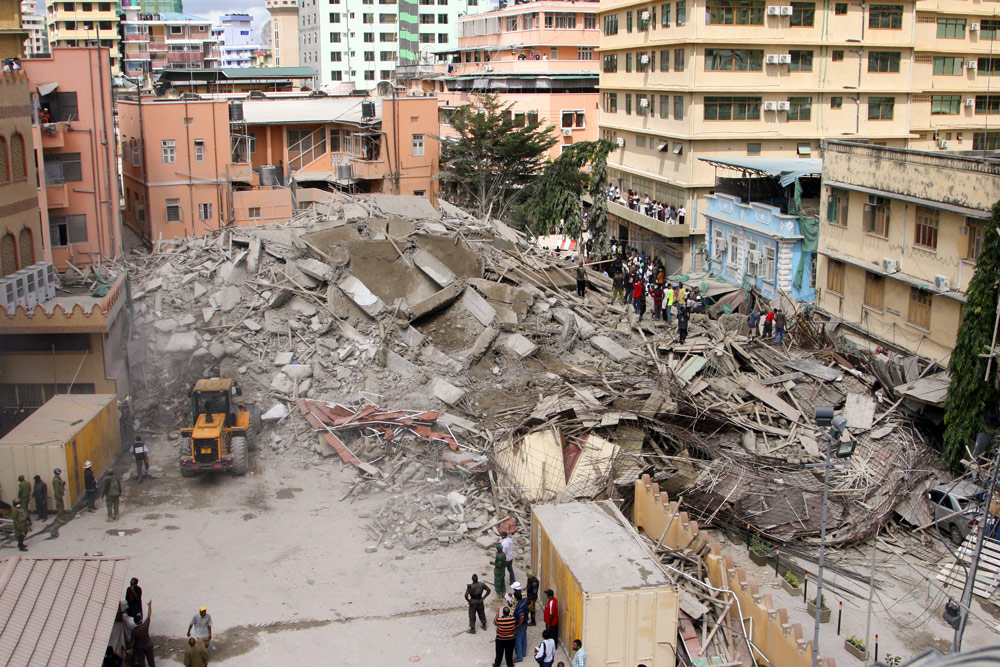
Governments were unsure how to react. If they banned cemsure the construction industry would collapse. It would take years to rebuild the portland cement industry and alternative construction materials would require redesign of all structures. The Pension funds had invested billions of dollars in infrastructure and buildings. They would be wiped out without government assistance.
Cemsure Corporation was owned by Pension funds, mainly in Canada. They were concerned that a ban on the product would wipe out their investment and open them to worldwide claims for damages as structures began to fail.
A technical committee was established by the US Federal government to establish the extent and
rate of deterioration in structures that had used cemsure. It would take 12 months for their work to determine government policy on future remediation. Politicians couldn’t wait that long as the potential to have collapses and deaths was too high.
The media began to publish nightmarish scenarios of collapsed buildings with hundreds of casualties and deaths. Calls for action against the owners of Cemsure put the government in a difficult position. The pension funds were clearly not to blame. They had been advised by Darling Corporation who claimed their due dilligence had been thorough and that the origional owners must have concealed key information.
Over the next 12 months hundreds of structures were condemed and homeless people were protesting that the government had approved the product and should pay compensation.
Cities were gridlocked as bridge closures blocked main arteries and reconstruction was impossible due to the lack of portland cement.
Figures started to emerge on national unemployment and homelessness. Reconstruction costs were in the trillions of dollars. Politicians demanded answers and more enquiries were set up to cope with the growing community unrest.
The environmental activitists were strangely silent. They had pushed hard to promote Cemsure and had never questioned its reliability.
Eric watched all these events unfold with amazement. Harry had called him several times but he could offer little help. He was a chemist and not involved in the construction industry. He had made a discovery and the world had embraced it.
John and Dave had caught up in Nice in the south of France after a few years of travel.
They were having dinner with their wives Janis and Alice in a restaurant overlooking a calm mediteranian sea. Janis started the conversation “ Every paper I read talks about the Global Cement Crisis (GCC). Weren’t you involved in cement John? “ Dave glanced at John with a quizical look. “Janis it was a long time ago. Dave and I worked together to improve the construction industry with a new product. We sold the company to some financial guys who were wizz kids with money. It’s all in the past.”
Alice explained to Janis that they had been sailing the world for years in their 68 foot ketch and had lost touch with the mainstream. She went into detail about the boat amenities and John refreshed their glasses with a very good red wine from the Rhone Valley.
The waiter approached the table with a phone. “ Is there someone here called John? “
“ Yes” John took the phone and discovered Eric was on the line from Australia.
“ John, Ive had my team study the instability problem with cemsure. I think we have come up with a fix! There could be some money in it.”
Grahame Campbell
 Grahame Campbell